
How to Subdivide Land in South Australia: A Step-by-Step Guide
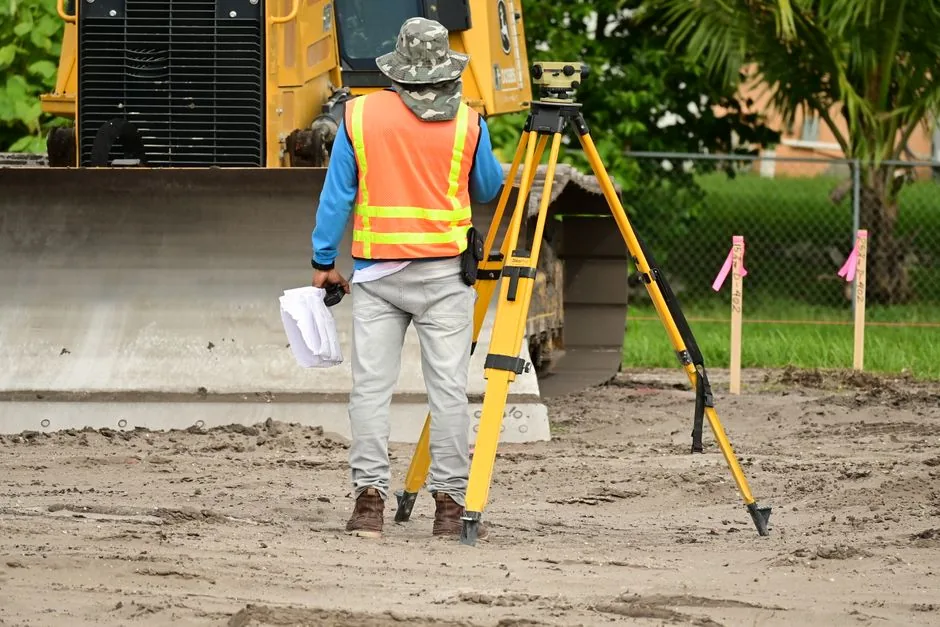
Photo: Nelson Axigoth via Pexels
Subdividing land in South Australia means legally dividing one allotment into two or more, realigning boundaries, or leasing part of an allotment for more than six years (source: City of Marion Land Division Development Fact Sheet). In practice, most landowners want the first option: turning a single block into two or more saleable titles. The process is run through the PlanSA Portal, assessed by the State Commission Assessment Panel (SCAP), and finalised by Land Services SA when new certificates of title are created (source: SA.GOV.AU Subdividing land; source: PlanSA SCAP).
In practical terms: check zoning -> engage a licensed surveyor -> lodge via PlanSA -> satisfy conditions -> obtain the Certificate of Approval -> lodge the plan with Land Services SA -> new titles issue.
This is the master guide to that journey. It walks through every stage end to end, then points you to dedicated, in-depth articles on the questions landowners ask most — whether your block qualifies, what it costs, and how long it takes.
The land division process, step by step
The standard SA land division pathway works like this (source: SA.GOV.AU Subdividing land):
- Check the minimum allotment requirements in the Planning and Design Code for your specific zone.
- Engage a qualified, licensed land surveyor to prepare your development application.
- The surveyor lodges the application via the PlanSA Portal.
- Obtain development approval and satisfy all conditions imposed.
- The surveyor completes a certified survey and lodges documents with the land title office to create new certificates of title.
SCAP is the relevant authority for land division applications under the Planning, Development and Infrastructure Act 2016, and it forwards applications to referral and statutory agencies — such as SA Water and SA Power Networks — for their requirements and conditions (source: PlanSA SCAP). Once SCAP, SA Water and Council conditions are met and fees are paid, SCAP issues the land division Certificate of Approval to your surveyor. This is the document that lets them lodge the Division Plan with Land Services SA for examination and approval, and the creation of new titles (source: PlanSA Land division Certificate of Approval).
One useful point: amalgamating two or more allotments does not require Council approval and can be lodged directly with the Land Titles Office through a surveyor (source: City of Marion Land Division Development Fact Sheet).
Step 1: Can your block be subdivided?
Minimum allotment sizes are set by the Planning and Design Code — the single source of planning policy in SA — and they vary by zone and council (source: Planning and Design Code, PlanSA). A commonly cited practical baseline is that land larger than about 700 square metres may be capable of subdivision, but this is an industry rule of thumb, not a statutory figure (source: Planning and Design Code, PlanSA). The binding minimums are zone-specific and must be read from the exact zone and overlays that apply to your property.
South Australia also has three property title types: Torrens Title, Community Title (under the Community Titles Act 1996), and Strata Title. Torrens Title division is the most common, used for single houses on their own allotments with no shared facilities (source: City of Marion Land Division Development Fact Sheet).
Because eligibility is so site-specific, we cover it in depth separately. See our dedicated guides on whether you can subdivide your block in SA and the minimum block size for subdivision in Adelaide before you commit to a surveyor.
Step 2: Mandatory contributions and connection charges
Two cost items catch many landowners by surprise.
Open space contributions. Divisions creating more than 20 allotments must set aside 12.5% of the land for open space, vested free of cost to the Council. For divisions of 20 or fewer allotments (and strata/community titles), a monetary contribution in lieu is paid into the Planning and Development Fund instead (source: DIT Open space contributions).
| Open space (payment in lieu) | Per additional allotment* |
|---|---|
| Metropolitan & Outer Metropolitan Adelaide | $7,253 |
| Regional South Australia | $2,912 |
*For each allotment/lot not exceeding one hectare. These figures may be reviewed each financial year — confirm the current rates with DIT before you budget (source: DIT Open space contributions).
SA Water augmentation charges. SA Water applies a per-new-allotment augmentation charge in the Greater Adelaide Region, levied for both water and wastewater. For 2025-26 the residential charges are:
| SA Water augmentation (2025-26, per allotment) | Water | Wastewater | Total |
|---|---|---|---|
| Infill | $2,560 | $2,560 | $5,120 |
| Greenfield | $5,120 | $5,120 | $10,240 |
SA Water automatically assesses your division for new connections after lodgement, and payment can typically be deferred (SA Water registers a caveat on the title until paid) (source: SA Water 2025-26 Augmentation charges). Note the infill charge is scheduled to rise each year until it matches the greenfield charge from 1 July 2027. As most SA fees update on 1 July, confirm the current 2026-27 schedule before you budget.
Step 3: Costs and timeframes
A standard one-into-two division in metropolitan Adelaide is commonly estimated at around $20,000-$25,000, with some surveyors quoting $30,000-$34,000 (source: Sawley Lock Surveyors). That range covers surveyor and consultancy fees, State Planning Commission and Council fees, Land Services SA examination and lodgement charges, SA Water connection fees, and conveyancer/title costs. Treat these as ranges — actual cost depends heavily on site and project complexity. For a full breakdown line by line, see our guide to the cost to subdivide land in Adelaide.
On timing, land division consent has legislated assessment timeframes: 30 business days where a division creates 10 allotments or fewer and no new public road is created, and 60 business days for all other land division (source: PlanSA Land division consent). These are the formal assessment clocks only; the full journey from enquiry to new titles is longer once survey, referrals and title creation are added. End to end, a simple division commonly takes around six months, with industry breakdowns citing roughly 6-8 months and complex divisions running over a year (source: Alexander Symonds). For the full stage-by-stage timeline, see our guide to the subdivision timeline in SA.
A practical way to compress timelines: entering a preliminary agreement with referral agencies (such as SA Water or SA Power Networks) before lodging removes the need for those referrals during formal assessment (source: PlanSA Referrals and preliminary agreements).
Step 4: Tax — what to know before you sell
Subdivision itself is not a CGT event — you do not make a capital gain or loss simply by subdividing. For CGT purposes, the acquisition date of the subdivided blocks is the date you acquired the original parcel, and the original cost base is apportioned across the new blocks on a reasonable basis (source: ATO Subdividing and combining land).
However, if you subdivide your main residence and sell the vacant block that does not contain the dwelling, the main residence exemption does not apply to that vacant land. And where a subdivision is carried out as a commercial or profit-making venture, the ATO can treat the profit as ordinary income — taxed at marginal rates with no CGT discount — and GST may apply if the activity amounts to an enterprise (source: ATO Subdividing land). These are national tax rules; seek professional advice for your circumstances.
Frequently asked questions
Q: Who approves a land division in South Australia? The State Commission Assessment Panel (SCAP) is the relevant authority for land division applications under the PDI Act 2016, and it refers applications to agencies like SA Water and SA Power Networks for their conditions (source: PlanSA SCAP).
Q: How big does my block need to be to subdivide? There is no single state-wide minimum. Minimum allotment sizes are set per zone in the Planning and Design Code and differ by council; around 700 square metres is an industry rule of thumb only. See our minimum block size guide (source: Planning and Design Code, PlanSA).
Q: How long does subdivision take in SA? Land division consent has a legislated assessment timeframe of 30 business days for 10 allotments or fewer with no new public road, and 60 business days for all other divisions. End to end, a simple division commonly takes around six months (source: PlanSA Land division consent; source: Alexander Symonds).
Q: How much does it cost to subdivide one block into two? Commonly estimated at around $20,000-$25,000 in metro Adelaide, with some surveyors quoting $30,000-$34,000 — treat these as ranges, not fixed prices. See our cost guide (source: Sawley Lock Surveyors).
Q: Do I need Council approval to combine two allotments? No. Amalgamating two or more allotments does not require Council approval and can be lodged directly with the Land Titles Office through a surveyor (source: City of Marion Land Division Development Fact Sheet).
How Cyberate PM can help
Most of the time and money lost in a subdivision comes from avoidable surprises — a block that misses a zone minimum, an SA Water augmentation charge that wasn't budgeted, or a referral condition that resets the clock. As an Adelaide-based development manager, Cyberate PM is designed to remove those surprises before they cost you. We confirm your block's potential against the Planning and Design Code up front, model the full fee stack (open space, SA Water, Land Services SA and Council) into a single feasibility, and manage your surveyor, referral agencies and conditions through to new titles — so the project stays on its timeline and within budget.
Explore our development management services, commission a feasibility-focused property report to pressure-test the numbers for your specific site, or book a consultation to map your block's lowest-risk path to title. Early planning is where most time and cost is saved — talk to us before you lodge.
Sources
- City of Marion — Land Division Development Fact Sheet
- SA.GOV.AU — Subdividing land
- PlanSA — State Commission Assessment Panel (SCAP)
- PlanSA — Land division Certificate of Approval
- PlanSA — Land division consent (assessment timeframes)
- Department for Infrastructure and Transport — Open space contributions
- SA Water — 2025-26 Augmentation charges
- SA Water — Augmentation charges / Connections
- PlanSA — Referrals and preliminary agreements
- Australian Taxation Office — Subdividing and combining land
- Australian Taxation Office — Subdividing land
- Planning and Design Code (PlanSA)
- Sawley Lock Surveyors — How much does it cost to subdivide land in South Australia
- Alexander Symonds — Guide to the Land Division Process in SA

Written by
Lin Yuan
Marketing Specialist, Cyberate PM
Lin Yuan is a marketing specialist at Cyberate PM (DDDI Group) in Adelaide, focused on making South Australian property development and project management clear for landowners, investors and developers.
View LinkedIn profileReady to Start Your Next Property Development Project?
We empower developers and investors by providing comprehensive property development solutions, from planning and management to investment analysis and value prediction. Let us simplify your journey to success.