
The Property Development Process in South Australia: Steps & Common Mistakes
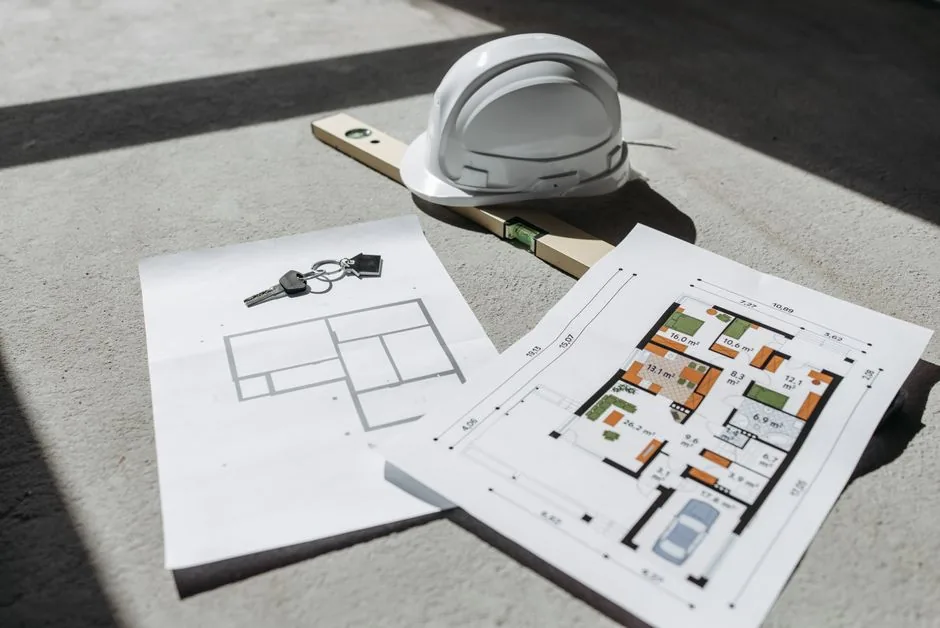
Photo: Pavel Danilyuk via Pexels
The property development process in South Australia runs through one statutory framework — the Planning, Development and Infrastructure Act 2016 (PDI Act) — and is administered online via the PlanSA portal. In short: you confirm what your site allows under the Planning and Design Code, secure the consents your proposal needs (planning, building and, where relevant, land division), satisfy conditions, and — for subdivisions — deposit a plan with Land Services SA to create new titles. The detail, and the cost of getting it wrong, is in the sequencing. This guide walks the steps and the most common mistakes, using SA terminology throughout.
Step 1: Confirm what your site allows
Every development application in SA is lodged online through the PlanSA portal, and the first thing to do is enter the property address into the Planning and Design Code to see whether approval is required. A pre-application discussion with a council Duty Planner is recommended before lodging (source: PlanSA — Development applications).
A development approval can be made up of one or more separate consents — the three main ones being planning consent, building consent and land division consent — with the number required depending on the nature and location of the proposal (source: PlanSA — Types of consent).
Step 2: Understand your assessment pathway
The Planning and Design Code sorts proposals into assessment pathways, which determine how much scrutiny — and public notification — your application attracts:
| Pathway | Notes |
|---|---|
| Exempt | No approval required |
| Accepted | No public notification |
| Code Assessed — Deemed-to-Satisfy | Fast-tracked; no public notification |
| Code Assessed — Performance Assessed | Assessed against Code criteria |
| Impact Assessed (Restricted / declared major projects) | May require an Environmental Impact Statement |
Exempt, Accepted and Deemed-to-Satisfy development do not require public notification (source: PlanSA — Assessment pathways).
Deemed-to-Satisfy development — for example, a standard new house in a residential zone that meets all Code criteria — is fast-tracked, cannot be refused, and the decision-maker must grant approval. All assessment types include a five-business-day verification period at the start and two business days at the end for the decision to be issued (source: PlanSA — Assessment pathways).
Step 3: Know who assesses land division
If you are subdividing, the assessing authority depends on scale. The State Commission Assessment Panel (SCAP), established under the PDI Act, acts as the lodgement authority for all land division applications and is the relevant assessment authority where the State Planning Commission is the relevant authority; it also acts as the concurring authority for non-complying applications (source: PlanSA — SCAP).
A separate Land Division Assessment Panel (LDAP) was established to assess large-scale land division proposals of 20 or more allotments, to assist the assessment process and reduce timing pressure on decision-making for major subdivisions (source: SA Planning Commission — LDAP).
Step 4: Survey, approve and create titles
In a Torrens-title land division, a licensed surveyor carries out the boundary/easement survey, drafts the plan to Land Services SA standards, and lodges the development application with SCAP. Once approval, conditions, fees and consents are satisfied, the final plan is deposited with Land Services SA and new Certificates of Title are issued — typically taking around 6 to 9 months end-to-end (source: Land Services SA — Land Division Process). Durations vary widely by council, site complexity, referrals and infrastructure requirements.
Step 5: Building work and licensing
In South Australia a building work contractor's licence from Consumer and Business Services (CBS) is required to carry out — or organise — building work for another person, or for the sale or lease of land or buildings, and all building work must be supervised by a registered building work supervisor; employees do not need a licence (source: SA.GOV.AU — Building work contractor's licence). This is the hard line between contracting the physical build and client-side coordination.
Demand-side settings that affect feasibility
These change frequently and sit at different levels of government, so treat the figures as point-in-time examples rather than fixed guarantees.
- Since 6 June 2024, SA abolished property-value thresholds for the first-home-buyer stamp duty exemption and the First Home Owner Grant, so eligible first home buyers of a new home, off-the-plan apartment, house-and-land package or vacant land to build on pay zero stamp duty at any price (source: Premier of SA).
- RevenueSA's First Home Owner Grant is a one-off payment of up to $15,000 for buying or building a new home; for contracts signed on or after 6 June 2024 no property-value cap applies, and applicants must occupy the home for at least 6 continuous months within 12 months of completion (source: RevenueSA).
- A temporary national ban prevents foreign persons from buying established dwellings from 1 April 2025; the redevelopment exception now requires the project to create 20 or more additional dwellings (raised from 1) (source: ATO). For 1 July 2025 to 30 June 2026, FIRB residential application fees for new dwellings and vacant residential land are $5,000 where the land is valued under $1 million and $10,000 per million (or part thereof) above that (source: FIRB — Guidance Note 10).
Common mistakes to avoid
Industry analysis identifies the most common property-development failures as poor due diligence, inaccurate feasibility and weak project management — including buying a site on price alone before confirming DA approval. Roughly 40% of feasibility models built in spreadsheets contain material errors, and 60–90 days (longer for complex sites) is typically appropriate for development-site due diligence (source: OwnerDeveloper.com.au).
Frequently asked questions
How many consents do I need? It depends on the proposal. A single development approval may combine planning, building and land division consents, with the number required driven by the nature and location of the project (source: PlanSA — Types of consent).
Can my application be refused if it meets the Code? Deemed-to-Satisfy development that meets all Code criteria is fast-tracked, cannot be refused, and the decision-maker must grant approval (source: PlanSA — Assessment pathways).
Who assesses a subdivision? SCAP is the lodgement authority for all land division applications; large-scale proposals of 20 or more allotments go to the LDAP (sources: PlanSA — SCAP; SA Planning Commission — LDAP).
How long does a Torrens-title subdivision take? Around 6 to 9 months end-to-end, though this varies by council, complexity, referrals and infrastructure (source: Land Services SA).
Do I need a builder's licence to develop? A CBS building work contractor's licence is required to carry out or organise building work; client-side coordination and advisory is a separate activity — confirm your own scope against CBS rules (source: SA.GOV.AU).
How Cyberate PM can help
Most development losses trace back to the early steps — buying on price before approval is confirmed, an over-optimistic feasibility, or a pathway misjudged. Cyberate PM works as a client-side development management, coordination and advisory partner, not a builder: we help confirm what your Code zoning allows, scope the right consents and assessment pathway, run disciplined due diligence within a sensible window, and coordinate the surveyor, consultants and PlanSA lodgement so the process holds together end-to-end.
If you are weighing a site, start with our development management services and a structured feasibility and reporting review. For the mechanics of specific stages, see our guides on how to subdivide land in SA, running a feasibility study in Adelaide, and the SA development approval (DA) process.
Thinking about a project? Book a consult and we'll help you map the steps before you commit.
Sources
- PlanSA — Types of consent
- PlanSA — Development applications
- PlanSA — Assessment pathways
- PlanSA — State Commission Assessment Panel (SCAP)
- SA Planning Commission — Land Division Assessment Panel
- Land Services SA — Land Division Process fact sheet
- SA.GOV.AU — Building work contractor's licence
- Premier of South Australia — Stamp duty abolished for first home buyers of new homes
- RevenueSA — First Home Owner Grant
- ATO — Banning foreign purchases of established dwellings
- Foreign Investment Review Board — Guidance Note 10 (Fees)
- OwnerDeveloper.com.au — Common Property Development Pitfalls (2025)

Written by
Lin Yuan
Marketing Specialist, Cyberate PM
Lin Yuan is a marketing specialist at Cyberate PM (DDDI Group) in Adelaide, focused on making South Australian property development and project management clear for landowners, investors and developers.
View LinkedIn profileReady to Start Your Next Property Development Project?
We empower developers and investors by providing comprehensive property development solutions, from planning and management to investment analysis and value prediction. Let us simplify your journey to success.