
What to Ask Before Buying a Block of Land in Adelaide: A Due-Diligence Checklist
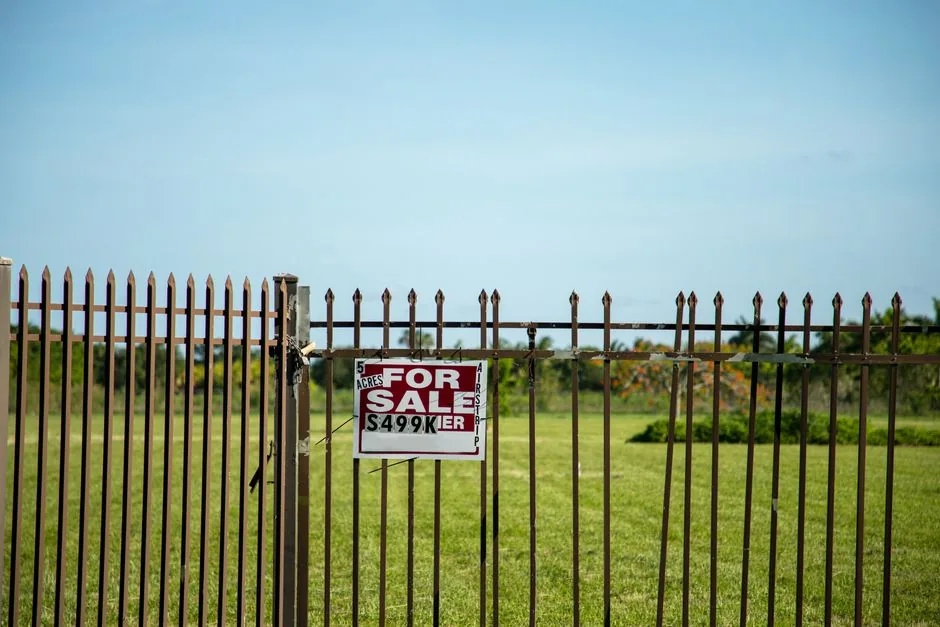
Photo: On Shot via Pexels
Primary keyword: what to ask when buying a block of land Adelaide
Knowing what to ask when buying a block of land in Adelaide comes down to one idea: confirm what you can legally build, what it will actually cost to make the land buildable, and what hidden interests or hazards sit on the title before you sign. The checklist below walks through the questions a careful South Australian buyer should put to the agent, vendor, conveyancer and relevant authorities — in SA terms, under SA law, with the figures we could source. None of this is legal or financial advice; it is a structured list of questions to take to the right professionals.
Start with what you can build: zoning and overlays
The first question is always "what does the planning system allow here?" Every parcel in South Australia is zoned under the Planning and Design Code, made under the Planning, Development and Infrastructure Act 2016, which replaced all the old council Development Plans and dictates what development is and isn't permitted on the land (source: PlanSA — Zoning for a property). Look the block up on PlanSA and the South Australian Property and Planning Atlas (SAPPA), and check both the zone and any overlays that apply to it.
There is no single state-wide minimum allotment size or frontage — those are set by the applicable zone and overlay and vary by council and locality, so they must be checked per-parcel via PlanSA/SAPPA and council advice rather than assumed.
Read the title and the Form 1
In SA the vendor must give the buyer a Form 1 (the Vendor's Statement, also called the Section 7 Statement), required under section 7 of the Land and Business (Sale and Conveyancing) Act 1994. It discloses encumbrances, easements, mortgages, covenants and other interests affecting the land (source: Australian Institute of Conveyancers SA — The Form 1 / Section 7 Statement). Ask for the Form 1 and the title (Register Search Statement) early, and have a conveyancer read both — an easement or covenant can quietly constrain where and what you build.
SA buyers also get a cooling-off period that ends at the close of the second clear business day after the Form 1 is served (the service day, weekends and public holidays don't count). The buyer can cancel in writing with no reason given, and any deposit over $100 must be refunded (source: Law Handbook SA — Cooling-off period).
Ask about contamination and ground conditions
Ask directly whether the land could be contaminated — for example from a former service station, orchard, industrial use or imported fill. The EPA recommends pre-purchase due-diligence enquiries and maintains a public Site Contamination Index / Public Register; site contamination is regulated under the Environment Protection Act 1993, and an EPA-accredited audit may be needed to confirm the land is suitable for residential use (source: EPA South Australia — Site contamination).
Confirm the services: water, sewer and wastewater
A "block of land" is only useful if it can be serviced. Confirm the block is actually serviced by SA Water and budget for augmentation charges. For development approvals between 1 July 2025 and 30 June 2026 in the Greater Adelaide region, new residential greenfield allotments pay a fixed augmentation charge of $10,000 per dwelling ($5,000 water + $5,000 wastewater); infill in greater Adelaide started at $2,500 and scales up to $10,000 from 1 July 2027 (source: SA Water — Augmentation).
If the block isn't connected to mains sewer, you'll need an approved on-site wastewater (septic) system, with works approval obtained before installation. Local council handles systems up to 6,000 L/day (≤40 EP) within a council area, while SA Health handles systems over 6,000 L/day or in unincorporated areas — so confirming the land can support a system is a due-diligence must (source: SA Health — On-site wastewater installation approval).
Check the bushfire overlay
Ask whether the block sits in a bushfire hazard overlay. Within the Planning and Design Code's Hazards (Bushfire – Urban Interface) Overlay, and within 100 m of a High Bushfire Hazard Area, a new dwelling needs a site-specific Bushfire Attack Level (BAL) assessment under Australian Standard AS 3959. That can require ember/radiant-heat construction and a minimum on-site water supply — materially affecting build cost (source: SA.GOV.AU — Bushfire regulations).
Budget the taxes and charges
The purchase price is only part of the bill. Key SA figures to factor in:
| Item | What to know |
|---|---|
| Stamp duty | A progressive 9-bracket scale topping out at 5.5% on value above $500,000 ($21,330 plus $5.50 per $100 over $500,000); applies to residential and primary-production land (source: RevenueSA — Rate of stamp duty). |
| First home buyer relief | Eligible first home buyers can pay no stamp duty when buying vacant land to build a new home (or a new home / house-and-land package), after the 2024-25 Budget abolished the property-value thresholds; ask whether the purchase qualifies (source: RevenueSA — Stamp Duty Relief for Eligible First Home Buyers). |
| Land tax | Vacant land is liable. For 2025-26 the general tax-free threshold is $833,000 of taxable site value; above it, rates rise through bands to a top marginal rate of 2.4%, and most trusts use a higher scale starting at a $25,000 threshold (source: RevenueSA — 2025-26 land tax rates and thresholds). |
These figures are for the 2025-26 year and are legislated/indexed annually, so re-verify them against the live RevenueSA pages at settlement time.
If you're a foreign buyer, or planning to subdivide
Foreign buyers must clear FIRB rules and surcharges. Vacant residential land approval is generally conditional on building at least one dwelling, completing construction within 4 years of approval, and not selling before completion; SA also imposes a 7% foreign ownership surcharge on the value of residential land acquired by foreign persons (source: Foreign Investment Review Board — Residential land). These rules are federal and fast-moving, so confirm current conditions with the ATO/FIRB and a lawyer.
If you plan to subdivide, understand the path. Torrens-title land division creates independent allotments (each generally with its own road frontage and separate water/sewer services), while community-title division creates lots plus shared common property. Subdivision requires development approval (lodged via PlanSA) and a Land Services SA dealing prepared by a registered conveyancer or solicitor, so seek council preliminary advice first (source: Land Services SA — A guide to subdividing land within South Australia).
Frequently asked questions
What is a Form 1 and why does it matter? The Form 1 is the vendor's mandatory disclosure statement under section 7 of the Land and Business (Sale and Conveyancing) Act 1994, setting out encumbrances, easements, mortgages and covenants affecting the land. Reading it (with the title) is a core due-diligence step (source: Australian Institute of Conveyancers SA).
How long is the cooling-off period in SA? It ends at the close of the second clear business day after the Form 1 is served; the service day, weekends and public holidays don't count. You can cancel in writing with no reason, and a deposit over $100 must be refunded (source: Law Handbook SA).
How do I find out the zoning of a block? Look it up on PlanSA and the SA Property and Planning Atlas (SAPPA). Every parcel is zoned under the Planning and Design Code, which governs what you can and can't build (source: PlanSA).
Will I pay stamp duty on vacant land? Generally yes, on a 9-bracket scale topping out at 5.5% above $500,000 — but eligible first home buyers building a new home can pay none (source: RevenueSA — Rate of stamp duty; RevenueSA — First Home Buyer Relief).
Is a "project manager" the same as a builder? No. In SA anyone who contracts to carry out building work generally needs a Building Work Contractor's licence from Consumer and Business Services (CBS), and the work must be supervised by a registered building work supervisor. A builder is licensed to construct; that is a distinct, regulated role from client-side development management or coordination (source: SA.GOV.AU — Building work contractor's licence).
How Cyberate PM can help
Cyberate PM is a client-side development management, coordination and advisory firm — not a builder. We don't hold a CBS building licence or pour the slab; we help landowners and project owners ask the right questions before they commit, so the answers don't become expensive surprises later.
That means coordinating the zoning, title, services, bushfire and tax checks above into one structured pre-purchase picture, then mapping the feasibility of what you actually want to do with the block. A clear-eyed pre-purchase feasibility report can tell you whether the numbers work before you sign, and our landowner partnership pathway is built for owners weighing what to develop.
If you're early in the process, our companion guides on whether you can subdivide your block in SA, the cost to subdivide land in Adelaide, and feasibility studies in Adelaide are good next reads. When you're ready to pressure-test a specific block, book a consultation and we'll help you work through the checklist.
Sources
- PlanSA — Zoning for a property
- Australian Institute of Conveyancers SA — The Form 1 / Section 7 Statement
- Law Handbook SA — Cooling-off period
- EPA South Australia — Site contamination
- SA Health — On-site wastewater installation approval
- SA.GOV.AU — Bushfire regulations (building)
- SA Water — Augmentation
- RevenueSA — Rate of stamp duty
- RevenueSA — Stamp Duty Relief for Eligible First Home Buyers
- RevenueSA — 2025-26 land tax rates and thresholds
- Foreign Investment Review Board — Residential land
- Land Services SA — A guide to subdividing land within South Australia
- SA.GOV.AU — Building work contractor's licence

Written by
Lin Yuan
Marketing Specialist, Cyberate PM
Lin Yuan is a marketing specialist at Cyberate PM (DDDI Group) in Adelaide, focused on making South Australian property development and project management clear for landowners, investors and developers.
View LinkedIn profileReady to Start Your Next Property Development Project?
We empower developers and investors by providing comprehensive property development solutions, from planning and management to investment analysis and value prediction. Let us simplify your journey to success.