
Dual Occupancy in Adelaide: Two Homes on One Block, and When to Split the Title
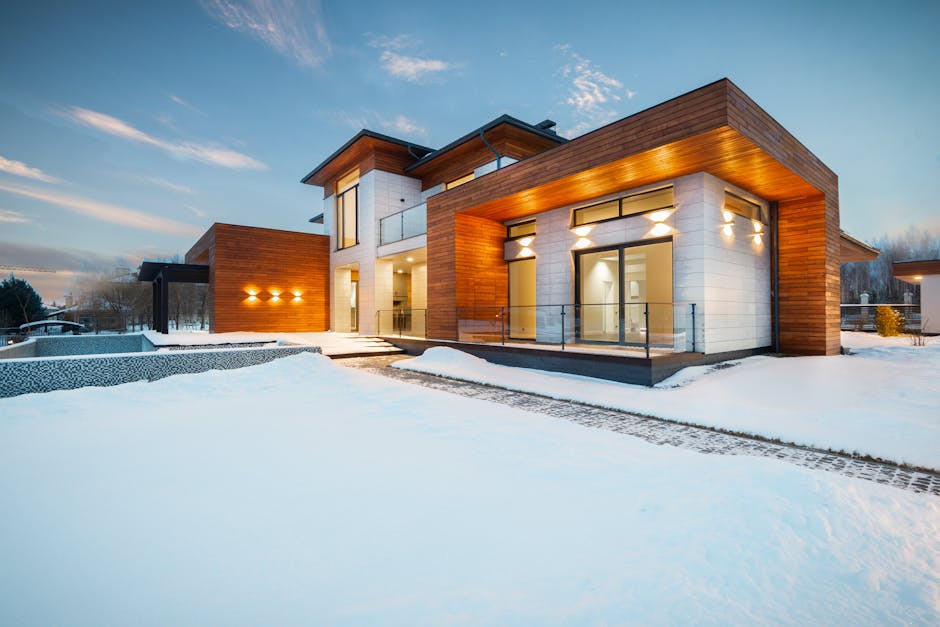
Photo: Max Vakhtbovych via Pexels
If you are weighing two homes on one block — parents in a second dwelling out the back, a downsizer keeping one and letting the other, or a first build-and-hold — the first question is not which builder. It is whether two-on-one is viable on your block at all: what your zone allows, what the approval looks like, and whether (and when) you would ever create two titles. Guides on this topic are often published by builders and written to support a build contract. This one is written from the owner's side, by Cyberate PM, an Adelaide-based development manager, with every figure cited to its government source. If you want the numbers behind a specific site, start with a feasibility study before you commit to anything.
Figures current as at 7 July 2026.
"Dual occupancy" is not a South Australian planning term
Here is the disambiguation almost no one spells out: South Australia's Planning and Design Code never uses the phrase "dual occupancy." The Code assesses two dwellings on one allotment as a semi-detached dwelling, a group dwelling, a residential flat building, or a detached dwelling plus an ancillary dwelling (source: PlanSA — Guide to the Planning and Design Code). Which class you fall into changes the rules that apply.
That distinction is not academic. SA Water's own 2026-27 augmentation schedule defines "Residential" using exactly these classes — semi-detached, group and multiple dwellings — and, critically, treats each premises as a separate connection (source: SA Water). So a dual occupancy is charged per dwelling for augmentation even when it stays on one title. Get the terminology right first; the money follows the class.
Dual occupancy or granny flat? Two different rulebooks
People often use "granny flat" and "dual occupancy" interchangeably. In SA they are governed very differently.
A granny flat is an ancillary dwelling: capped at 70 m², a maximum of two bedrooms, on an allotment of at least 600 m², and — since the 2024 regulation change — it can now be rented to anyone, not only a family member (source: PlanSA). But an ancillary dwelling cannot be sold on its own title. It stays tied to the main house.
A genuine second dwelling has no floor-area cap and can eventually carry its own title — but it must satisfy the Code's full infill design rules (below). The decision is goal-led: if the aim is simply to house a parent or add rental income without ever separating title, an ancillary dwelling is simpler. If you want the option to sell or refinance one home on its own down the track, you need a full second dwelling from the outset.
Where the Code allows two homes: zones, TNVs and your 10-minute check
Whether two dwellings fit is set by your zone and its Technical and Numeric Variations (TNVs) — the minimum site area and frontage per dwelling that vary council by council. Two homes are most commonly envisaged in zones such as General Neighbourhood, Housing Diversity Neighbourhood, Established Neighbourhood and Master Planned Neighbourhood (source: PlanSA — Guide to the Planning and Design Code).
You can check your own block in about ten minutes. Open the South Australian Property and Planning Atlas (SAPPA) at sappa.plan.sa.gov.au, enter your address, and read off your zone, any overlays, and the minimum site area and frontage per dwelling that apply. The trap is checking the headline minimum lot size for one dwelling and assuming two will fit — the number that matters is the minimum per dwelling, and if you intend to split the title later, each new allotment must meet it in its own right. TNVs differ across, say, an eastern-suburbs versus a western-suburbs council, so a layout that works one suburb over may not work on yours.
The approval pathway: one application, two dwellings
Building two homes on one existing title needs planning consent and building consent — and that is all. You only need land division consent if you are creating separate titles (source: PlanSA — Types of consent). Many multigenerational families build two-on-one and never divide.
Within planning consent, how your proposal is assessed matters for speed. A compliant design can be deemed-to-satisfy — faster, with no public notification. A design that departs from the Code goes performance-assessed, decided on merit, with possible neighbour representations that add time (source: PlanSA — assessment pathways). Certain features trigger referrals — a regulated tree is the classic one. For the full walkthrough of pathways, timeframes and clearances, see our SA development approval process guide.
The design rules that decide approval (the ones builders skip)
SA's strengthened residential-infill policy loads real obligations onto each new dwelling and each new allotment: tree planting, soft landscaping, private open space, street interface and on-site parking (source: PlanSA — Raising the bar on Residential Infill). These are exactly the requirements a sales-led guide tends to gloss over, and they can reshape a layout.
Two figures worth knowing. Where you cannot plant a required tree, the urban tree canopy off-set is payable before development approval: $533 (small), $1,065 (medium) and $1,598 (large) per tree (source: PlanSA). Separately — and this is the classic site-killer — an existing tree with a trunk circumference of 1.0 m (measured one metre above the ground) is a regulated tree, and 2.0 m makes it significant; there is a 3 m exemption around a dwelling or pool, and removing a regulated tree carries a $1,000 offset (a significant tree, $1,500) (source: PlanSA). A protected tree sitting in the second driveway line can force a redesign or sink the project. Screen for it early.
When to split the title — and when not to
This is the decision the keyword hides. You have three broad strategies.
Keep both on one title. Best for housing two generations or letting both dwellings. No land division consent, no open space contribution. The constraints are commercial: some lenders and buyers treat two-on-one-title differently, so get advice on financing and resale before you lock it in.
Torrens division. Two clean, fully separate allotments. Each must meet the zone's TNVs in its own right, and you take on the full division cost stack (below). This is the route that gives each home the most standalone flexibility. See how to subdivide land in SA.
Community title. Suits layouts with a shared driveway or shared services; it creates a community corporation with ongoing obligations (source: Land Services SA). Whether Torrens or community fits depends on your frontage, services layout and exit plan.
On timing, "divide-then-build" versus "build-then-divide" both run through the same clearance bottleneck: the s138 Certificate of Approval stage, where SA Water clearance and council conditions must be satisfied before titles issue. On exit, keeping both, letting both, or selling one are all live options — and if you would rather not fund the build yourself, a landowner joint venture is one structure to get advice on. On tax: subdividing is not itself a CGT event, the new allotments keep the original acquisition date, and the cost base must be apportioned reasonably (source: ATO) — general information only; coordinate with your accountant.
What two-on-one pays in government fees, FY2026-27
Beyond construction, a two-dwelling infill build on one metro Adelaide block carries a government-fee stack. These are the build-stage charges that apply whether or not you split the title:
DA lodgement fee — FY2026-27: $98.50 (<$10k) → $6,308 (>$10M); Notes: scaled by build cost; confirm your band (source: Gazette No. 33; PlanSA)
Planning assessment (performance-assessed) — FY2026-27: greater of $299 or 0.125% of dev cost; Notes: ≈ $1,000 on an $800k build (source: PlanSA)
SA Water water augmentation — FY2026-27: 2 × $4,017 = $8,034; Notes: charged per dwelling, even on one title (source: SA Water)
SA Water wastewater augmentation — FY2026-27: 2 × $4,017 = $8,034; Notes: same per-dwelling basis; combined ≈ $16,068 (source: SA Water)
nbn new-development contribution — FY2026-27: per premises; Notes: confirm current figure with nbn
Urban tree canopy off-set (if you can't plant) — FY2026-27: $533 / $1,065 / $1,598 per tree; Notes: e.g. two large trees = $3,196 (source: PlanSA)
If you then split the title, add the division increment:
Open space contribution — FY2026-27: $10,166 per additional allotment (Greater Adelaide); Notes: a 1-into-2 pays once, at CoA stage (source: Gazette No. 33; PlanSA)
Certificate of Approval (s138) — FY2026-27: $1,229; Notes: post-approval (source: PlanSA)
Lands Titles Office plan stack — FY2026-27: ≈ $1,832; Notes: examination $1,231 + deposit $189 + 2 × title $112 + Survey Act levy $188, plus $15/document (source: Land Services SA)
Land division assessment — FY2026-27: from $210; Notes: on assessment (source: PlanSA)
The single biggest surprise for most owners is the SA Water line: because each dwelling counts as a connection, water augmentation alone is $8,034 for the pair before you touch wastewater or division. For the detail behind each figure, see our SA Water augmentation charges and DA and land division fees guides.
Five ways dual-occ projects go wrong
From the owner's side, the failure modes repeat:
A regulated tree found late in the second driveway line, forcing a redesign after the budget is set.
Assuming granny-flat rules apply to what is actually a full second dwelling with no size cap but full infill obligations.
Buying on the headline minimum lot size without checking the TNV for two dwellings — or for two separate allotments.
Community-corporation obligations nobody explained until after title creation.
Augmentation and connection charges surfacing at clearance stage, thousands of dollars after the feasibility was supposedly done.
Getting the right person to run the project matters — see what a development manager does.
Is two-on-one viable on your block?
The honest answer for any given block is: it depends on the zone, the TNVs, the trees, the services and your goal — which is exactly what a feasibility check tests before you commit a dollar. On an owner-side feasibility study we confirm whether your zone and TNVs allow two dwellings, screen for regulated trees and service constraints, identify which built-form configuration your block supports, price the FY2026-27 government fee stack, and tell you whether — and when — a title split makes sense.
That maps to our SAFE model: Strategy (which configuration and title path fits your goal), Approvals (pathway selection, referrals, tree strategy), Build Governance (client-side oversight of the builder and contract for this engagement — we coordinate licensed professionals and do not perform statutory surveying, conveyancing or certification), and Exit (keep, rent, or sell one). It is owner-aligned throughout — the numbers, not the sales pitch.
Thinking about two homes on one block? Book an owner-side feasibility consultation, or read more about our property development feasibility service. 中文咨询同样可以。
Frequently asked questions
Can I build two houses on one block in Adelaide? Yes, if your zone allows it. The Planning and Design Code does not use "dual occupancy" — it assesses two homes on one allotment as semi-detached dwellings, group dwellings or a residential flat building, and each zone sets a minimum site area and frontage per dwelling. Check your zone on SAPPA, or get a feasibility check before you commit (source: PlanSA).
Do I have to subdivide to build two homes on one block? No. Two dwellings can sit on a single title with just planning and building consent — land division consent is only needed to create separate titles (source: PlanSA). Many multigenerational families never divide; owners who want the flexibility to keep, let or sell each home on its own tend to move to separate Torrens titles.
What's the difference between a dual occupancy and a granny flat in SA? A granny flat (ancillary dwelling) is capped at 70 m² and two bedrooms, needs a 600 m²+ allotment, and since 2024 can be rented to anyone — but it can't be sold separately. A full second dwelling has no size cap and can eventually get its own title, but it must satisfy the Code's complete infill design rules (source: PlanSA).
How much does dual occupancy cost in government fees in 2026-27? Beyond construction: SA Water augmentation of $4,017 per dwelling for water on the infill residential rate — and the same again for wastewater, roughly $8,034 per dwelling for both (source: SA Water); planning application fees scaled to build cost (source: PlanSA); tree off-sets of $533–$1,598 per required tree you can't plant (source: PlanSA); and a per-premises nbn contribution (confirm the current figure with nbn). Splitting the title later adds the Lands Titles Office plan stack (about $1,832) plus an open space contribution of $10,166 for the additional allotment in Greater Adelaide (source: Gazette No. 33; PlanSA).
Should I choose Torrens or community title when I split a dual occupancy? Torrens gives each home its own fully separate allotment and the most standalone flexibility at exit, but each lot must meet the zone's minimums on its own. Community title suits shared driveways or services and creates a community corporation with ongoing obligations (source: Land Services SA). The right answer depends on your frontage, services layout and exit plan — get advice specific to your site.
Expert property development and project management insights.
Not Sure Whether Your Site Stacks Up?
Send us the address and your goal. We will identify the first planning, buildability and feasibility questions before you commit further capital.