
Taking the Old House Down in Adelaide: The Separate Approvals and Disconnections Behind a Demolition Date
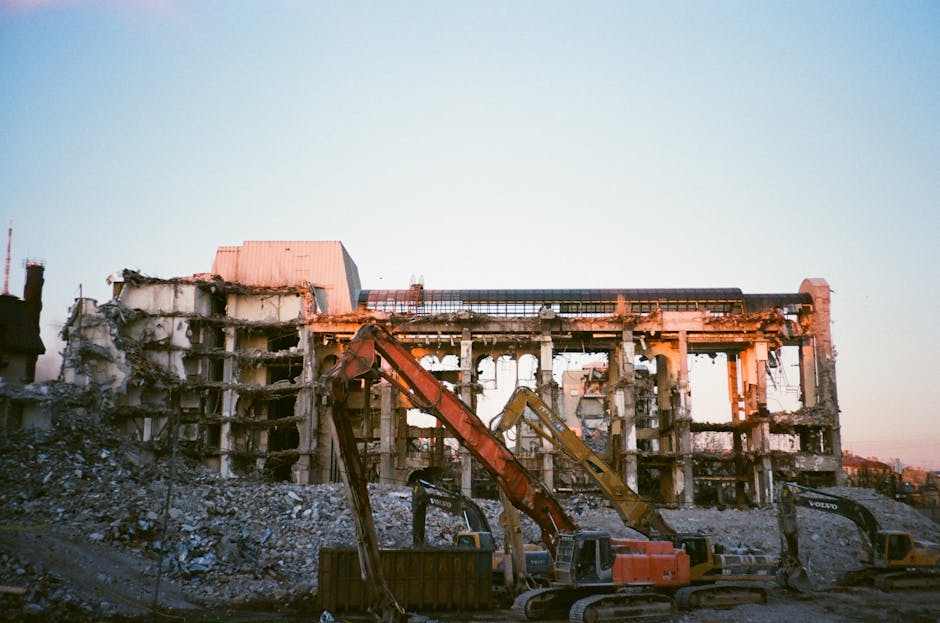
Taking the Old House Down in Adelaide: The Separate Approvals and Disconnections Behind a Demolition Date
General information for South Australian landowners only. This is not legal, planning, work health and safety, or building advice. Whether your proposal requires development approval and which consents apply is for an experienced planning consultant and the relevant authority; contractor licensing and work health and safety obligations are matters for Consumer and Business Services and SafeWork SA and for your licensed contractors; asbestos identification and removal must be handled by appropriately licensed professionals under the applicable legislation; service disconnections are matters for each utility. Requirements are amended over time and vary with your site and your structure, so confirm the live position for your own property before you rely on anything here.
One date, several separate permissions
An owner asks when the house can come down, and receives a date. The date looks like the output of one process.
It is not. A demolition sits on top of several authorisations that are held by different bodies, obtained by different parties, running on different timescales — and no single one of them is scheduling the others. They are largely parallel rather than sequential, with one important exception covered below. A gap in any one of them can stop the site regardless of how ready the rest are.
The owner is one of the few parties positioned to see all of them at once — a development manager coordinating the project is another — which is why this is worth understanding even though almost none of the work is yours to do.
One boundary first: this article assumes demolition is achievable and asks how it is actually arranged. Whether you are permitted to demolish is a different question, governed in inner Adelaide by overlays that control exactly that — see can the house come down.
The parallel lines
1. Development approval. Demolition of a building is generally something that requires approval, and councils publish material setting out the requirements for demolition work (source: City of Salisbury — Demolition Works: Development Approval Requirements; City of Marion — Demolition of buildings and structures fact sheet). What your own proposal requires, and which consents, is for your planning consultant and the relevant authority — the general sequence is in the development approval process in South Australia.
2. A licensed contractor. Published guidance states that demolition contractors must hold a South Australian contractor's licence issued by Consumer and Business Services for the type of demolition being undertaken (source: SafeWork SA — Demolition work). Which licence is required for your job is for Consumer and Business Services, SafeWork SA and your contractor to confirm — the point for an owner is that it is checkable before you sign rather than assumed.
3. Notification to SafeWork SA. For demolition involving a structure or part of a structure that is load-bearing or otherwise related to the physical integrity of the structure, and that reaches a specified height, notification to SafeWork SA is required a prescribed number of days before work commences (source: SafeWork SA — Demolition work). Whether your structure triggers it, and the current notice period, is for your licensed contractor to confirm — the point for an owner is that a lead time exists and is not zero.
4. Asbestos. Covered separately below, because on many projects it is the line that shapes the others.
5. Service disconnections. Electricity, gas, water and sewer each have their own process, their own authority and their own lead time. These are routinely underestimated because they feel administrative. The electricity network's role in a project is covered in planning the SA Power Networks leg, and water infrastructure on a site in SA Water easements and build-over approval.
Several lines, and several different bodies — a relevant authority, Consumer and Business Services, SafeWork SA, each utility, and your licensed contractors and consultants — with no shared calendar between them. That is the actual management problem.
Asbestos tends to sit ahead of the other lines, not beside them
This is the ordering point, and it is the thing most worth taking from this article. How it applies to your building depends on the structure, on what is likely to be disturbed, and on professional advice.
The person engaged to undertake demolition or refurbishment work must ensure that asbestos likely to be disturbed is identified and, so far as is reasonably practicable, removed before the demolition or refurbishment commences (source: Asbestos.sa.gov.au — Demolition and Refurbishment). Published guidance describes removal being carried out by a licensed asbestos removalist, with licence holders notifying SafeWork SA before undertaking asbestos removal work (source: SafeWork SA — Asbestos licences).
Licensing distinguishes between friable and non-friable material, with different licence classes applying, and there is a threshold below which a licence is not required for a small quantity of non-friable material — though published guidance is clear that safety standards must not be compromised in that case (source: SA.GOV.AU — Asbestos removal licence; SafeWork SA — Asbestos licences). What is actually in your building is established by inspection; which licence class and requirements follow from that is for SafeWork SA and your licensed contractor.
So the published guidance points to an order: identify, deal with what is found under the applicable licensing and notification requirements, and then demolish. What that requires on your building — including how the "so far as is reasonably practicable" qualification in the guidance applies — is for SafeWork SA and appropriately qualified professionals. Either way the asbestos survey is not a step alongside the demolition booking; it is upstream of it, and its findings bear on the length of everything that follows.
The practical consequence for an owner: an achievable demolition date tends to rest on an early asbestos investigation rather than a late one. An owner who books a demolition date and then discovers friable material has a date that was never real. An owner who investigates early has a date built on the actual condition of the building.
Older housing stock is exactly where this matters, and older housing stock is much of what gets demolished for infill.
What else can attach to a demolition
Two further items, easy to miss, that have stopped sites:
Trees. Removing a building is not the same as removing what is around it. Where a tree is regulated or significant, its own regime applies and it is not resolved by having demolition approval — see regulated and significant trees in SA.
What is under the building. Demolition can be the moment site conditions become visible: fill, former uses, or contamination. The site-history screening that belongs before you develop is set out in is your Adelaide block contaminated, and the fill question in uncontrolled fill and Class P sites. Discovering either after the building is down is discovering it at the least convenient moment.
Adjoining structures are the other recurring one — party walls, shared fences, retaining. Where a retaining structure is involved, retaining walls on sloping blocks sets out the questions that arise for your solicitor and consultants.
Frequently asked questions
Do I need approval to demolish my own house? Demolition of a building is generally something requiring approval, and councils publish their requirements. Whether and what your proposal needs is for your planning consultant and the relevant authority against your own property.
How long does the whole thing take? It is set by the longest line, and where asbestos is present that line can be the one driving the programme, because identification and any licensed removal and notification come before demolition. This is why the survey is worth commissioning early.
Can my builder handle all of it? On the published guidance, demolition work calls for a contractor licensed for the type of work, and asbestos removal is described as work for a licensed removalist, subject to the licensing exception noted above. What is required on your job is for SafeWork SA, Consumer and Business Services and your contractor to confirm; what a particular builder holds, and what they are arranging versus what you are, is worth establishing in writing — the general method for reading scope in a quote is in reading builder quotes side by side.
What if asbestos is found once work has started? What has to happen before work in the affected area continues is for your licensed contractor and SafeWork SA to determine under the applicable requirements — and that pause is the delay an early survey exists to prevent. What a delay does to a project's numbers is set out in how to price a delay.
Is a knock-down rebuild simpler than subdividing? They are different projects with different approval paths, and one is not automatically simpler. Which instruments and pathways apply to each on your land is a question for your planning consultant and the relevant authority.
Who authorises what, and where Cyberate PM sits
- Whether demolition requires approval, and on what terms — the relevant authority, with your planning consultant advising you.
- Contractor licensing — Consumer and Business Services, with the licensing requirements applying to the contractor you engage.
- Work health and safety, demolition notification and asbestos removal licensing — SafeWork SA, and your licensed contractors.
- Identifying asbestos — an appropriately qualified professional; what competency is required is a matter for SafeWork SA and the applicable requirements.
- Removing asbestos — an appropriately licensed removalist where a licence is required, with applicability confirmed by SafeWork SA.
- Service disconnections — each utility.
- Ground conditions and contamination — your geotechnical and environmental consultants.
Cyberate PM does none of those. We do not demolish, hold demolition or asbestos licences, identify or remove hazardous materials, or grant approvals. We work owner-side: we get the asbestos investigation commissioned early enough to set a real date, hold the five lines against one calendar so the one with the longest lead time is known rather than discovered, and keep the disconnections moving alongside the approval rather than after it. What that role covers is set out in what a development manager actually does.
Before you book a date
- Has the building been investigated for asbestos, by someone qualified, and what did it find?
- If material is present, what class, and what does licensed removal and notification require?
- Is the demolition itself approved, and on what conditions?
- Is my contractor licensed for this type of demolition?
- Does the structure trigger a notification requirement, and has the lead time been counted?
- Have all the relevant services been booked for disconnection, and what are their lead times?
- Are any trees involved, and are they subject to their own regime?
- Do I know what is under the building — or will I find out the day it comes down?
The date worth having is the one that comes out of those answers. A date set before them is a plan waiting to be corrected.
Planning requirements, licensing, work health and safety obligations and notification periods are amended from time to time and vary with the structure and the site. Nothing here states what applies to your property. Confirm the current position with your licensed contractors and your own advisers. Reflects publicly available material as at August 2026.
Sources
- SafeWork SA — Demolition work
- SafeWork SA — Asbestos licences
- Asbestos.sa.gov.au — Demolition and Refurbishment
- Asbestos.sa.gov.au — Asbestos and the law
- SA.GOV.AU — Asbestos removal licence
- City of Salisbury — Demolition Works: Development Approval Requirements
- City of Marion — Demolition of buildings and structures fact sheet
Expert property development and project management insights.
Not Sure Whether Your Site Stacks Up?
Send us the address and your goal. We will identify the first planning, buildability and feasibility questions before you commit further capital.