
The Block With No Legal Way In: Where a Right of Access Comes From
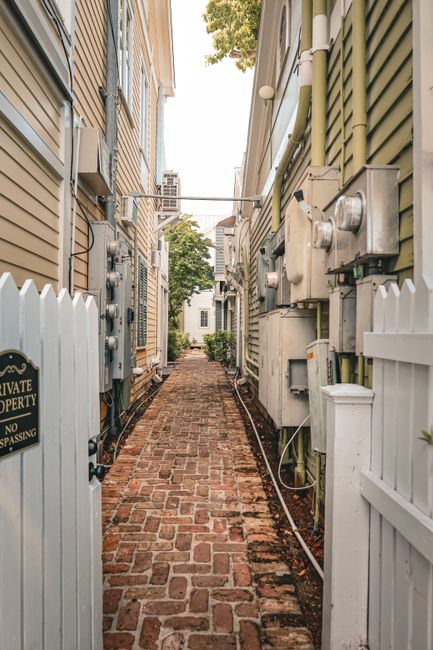
The Block With No Legal Way In: Where a Right of Access Comes From
General information for South Australian landowners only. This is not legal advice. Whether your land has a legal right of access, what any registered easement permits or restricts, and what may be done where access is missing are questions for an SA property lawyer or conveyancer, with boundaries and the physical extent of any easement confirmed by a licensed surveyor. Registered interests and the legislation governing them change over time and the position on your own title governs, so confirm it before you rely on anything here.
Driving in is not the same as being entitled to
There is a track. People have used it for years. It is obvious, it is worn, and it goes exactly where you need to go.
None of that is the same thing as a right. The ability to reach a block and the legal entitlement to cross what lies between are separate facts, recorded in different places — one on the ground, the other on a title. Whether a particular history of use establishes anything is a question for an SA property lawyer, not one to settle by inspection.
That gap is where landlocked-block problems live. A parcel with no legal way in can look entirely normal on an inspection, and the first time the difference matters is usually the worst possible time: at finance, at subdivision, or when the neighbour whose land you have been crossing sells to someone with different plans.
This article is about where a right of access comes from. It is not about SA Water's easements or building over them — that is SA Water easements and build-over approval — and it is not about the title instruments that can hold up new titles generally, which is encumbrances and land management agreements. This is narrower: the right to get in.
What an easement actually is
An easement lets someone other than the owner access and use a section of the owner's land, and it can also restrict how the owner may use that section (source: Land Services SA — A guide to easements and rights of way; SA.GOV.AU — Easements and restrictions on land).
Two halves of that sentence, and owners usually only hear the first. An easement is not only a permission granted to someone else; it is also a constraint on the burdened land. If your title carries one, part of your block is subject to another party's rights, and what you may build there is affected accordingly.
A right of way is the access species of that: on the published summary, where a neighbour has a right of way across land that person may pass over that section (source: SA Law Handbook — Rights of Way). What any particular right permits comes from the registered instrument and the law applying to it, which is your lawyer's reading rather than a general one.
The registration point, which is the whole article
Here is the fact that decides most of these situations.
On the published position, a right of way does not continue when land is transferred to a new owner unless it is registered on the certificate of title. Where it is registered, it stays with the land as the land is bought and sold, and normally it cannot be ended unless all parties involved agree (source: SA Law Handbook — Rights of Way; Land Services SA — Easements).
Read that in both directions, because it cuts both ways and owners are usually only alert to one of them.
If the access you rely on is not registered, a change of ownership next door may end it. An arrangement that has worked for years between neighbours who get along may be an accommodation rather than a property right — and what survives a sale is a question for your lawyer on the facts, not something to assume in either direction.
If your title carries one in favour of someone else, you generally cannot simply remove it because it is inconvenient. Registered interests persist and, on the published position, come off by agreement rather than by preference.
So the question to ask about any block whose access crosses someone else's land is not "can I get in", and not even "has anyone stopped me". It is: is it on the title, and what exactly does it permit? That is a question for your conveyancer or SA property lawyer reading the actual title, and for a licensed surveyor confirming where the thing physically sits — the two answers are not interchangeable, and the fence is not the boundary covers why the visible evidence is the less reliable of the two.
The easements nobody granted
One more category, because it surprises people who have read their title carefully and concluded they are clear.
Certain statutory easements — electricity, sewerage, telecommunications — may not be registered or defined on a title at all (source: SA.GOV.AU — Easements and restrictions on land).
Which means a title search is necessary and not sufficient. What sits under or across a block can constrain what you build on it without appearing where you looked. Those are questions for the relevant authorities and your engineer, and they belong in due diligence rather than in a later surprise: the wider checklist is in what to ask before buying a block of land.
Where subdivision creates the problem rather than inherits it
Landlocked parcels are not only accidents of history. Division creates them too, on paper, and the rear allotment is the usual candidate.
The moment a division puts a new parcel behind an existing one, that parcel's access has to come from somewhere, and what that somewhere has to be is a due-diligence question for your surveyor, planning consultant and lawyer together rather than something an intention settles. Whether the arrangement you have in mind is workable, what it needs to be, and whether it satisfies the authorities that must be satisfied are questions for your planning consultant, your surveyor and your lawyer together, early — because the layout that assumed access and the layout that documented it can be different layouts. What a division has to clear generally is set out in can I subdivide my block, and the frontage and dimension side in minimum block size to subdivide.
When there is no right and the neighbour says no
This is the situation owners most want a clean answer to, and the honest position is that there is not one that fits in an article.
One option owners discuss with their solicitor is negotiating a registered easement with the neighbouring owner. Where that is on the table it is a commercial negotiation as much as a legal one — the party you need something from knows you need it. There are also statutory mechanisms in South Australia touching acquisition of land and of rights over land, including the compulsory acquisition regime, but who may use them and in what circumstances is well outside what a landowner should infer from a general article (source: SA Law Handbook — Compulsory Acquisition of Land).
What matters practically is that this is a question to ask before you buy, not after. Discovering it late can leave your negotiating position visible to the person on the other side.
Frequently asked questions
We have always driven across next door. Doesn't that give us a right? Long use and a registered right are different things, and on the published position a right of way does not survive a transfer unless it is registered. What your particular history establishes, if anything, is a question for an SA property lawyer.
Can I remove an easement from my title? Registered interests generally persist and, on the published position, are removed by agreement of the parties. Whether anything else is available on your facts is for your lawyer.
Does an easement stop me developing? It constrains what may be done in the affected part of the land, which may or may not matter to your scheme. That is a design question once the extent is known — which is why the surveyor's location work and the lawyer's reading of the instrument come before the layout.
Will a lender care? Lenders and valuers may take access into account when assessing a parcel. What effect it has in your case is for them to determine, with your broker.
The title looks clear. Am I safe? Not necessarily — statutory easements for services may not appear on it. A clear title is one input, not the whole answer.
Who determines what, and where Cyberate PM sits
What your title carries, what it permits, and what may be done about it — your SA property lawyer or conveyancer.
Where a boundary or an easement physically sits — a licensed surveyor.
What services run under or across the land — the relevant authorities, with your engineer.
Whether a proposed layout is approvable — your experienced planning consultant and the relevant authority.
What the land is worth given its access — a registered valuer.
Cyberate PM does none of those. We do not give legal advice on titles, locate boundaries, or grant approvals. We work owner-side: we get the access question asked at due diligence rather than at lodgement, put the title, the survey and the layout in front of each other early enough that a scheme is not designed across a right that does not exist, and hold the sequence so a missing right is found while you still have a choice about the site. What that role covers is set out in what a development manager actually does.
Before you commit to a site
Does the title show a registered right of access, and over exactly what land?
If access crosses someone else's land, is that arrangement registered — or is it a habit?
What does any easement on my own title permit the other party to do, and what does it stop me doing?
Has a surveyor confirmed where the easement physically runs, rather than where it appears to?
If I intend to divide, where does the rear parcel's access come from, and in what instrument?
Are there service easements that would not appear on the title?
An access question resolved before contract is one you still have choices about. Left until afterwards, the choices narrow.
Registered interests, statutory easements and the legislation governing acquisition change over time, and the position on your own title governs. Nothing here states what your title carries. Confirm with your own legal adviser and surveyor before acting. Reflects publicly available material as at August 2026.
Sources
Expert property development and project management insights.
Not Sure Whether Your Site Stacks Up?
Send us the address and your goal. We will identify the first planning, buildability and feasibility questions before you commit further capital.