
Early Site Works at the Owner's Risk: Which Steps Stop Being Reversible
Early Site Works at the Owner's Risk: Which Steps Stop Being Reversible
General information for South Australian landowners only. This is not legal, planning, environmental or engineering advice, and nothing here is an opinion about your site. Whether a particular activity on your land is development, whether it needs approval, and which consents apply is for an experienced planning consultant and the relevant authority; enforcement, appeals, notices to neighbours and your exposure if works are challenged are for an SA planning and administrative law lawyer; native vegetation clearance is a matter for the Native Vegetation Council and a native vegetation consultant; trees are a matter for a qualified arborist and your council; earthworks, fill and site classification are for a geotechnical engineer and your civil engineer. Requirements change and vary by site, so confirm the live position for your own property before you rely on anything here.
The decision you are actually making
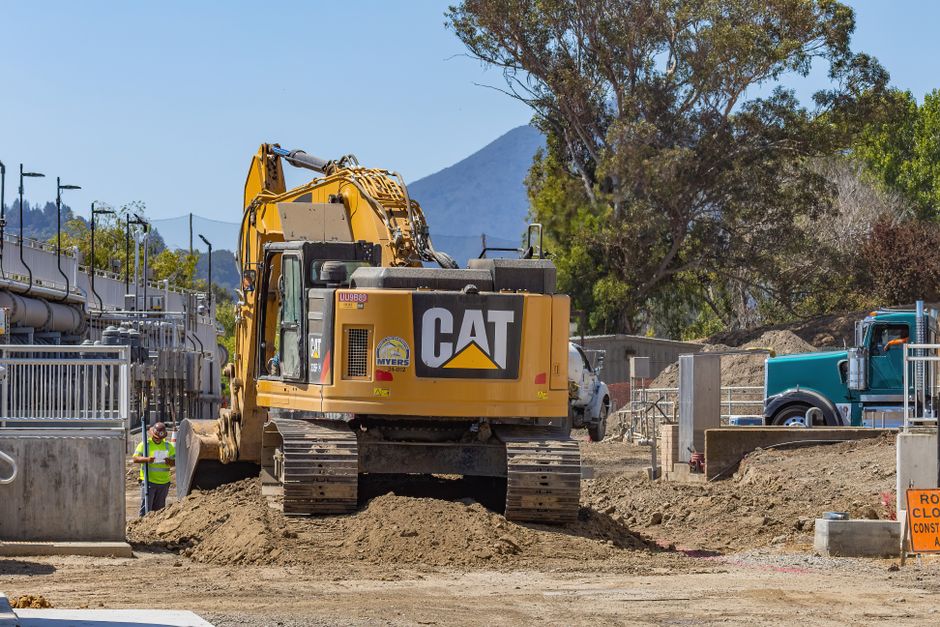
The excavator is available in a fortnight; after that the contractor is booked elsewhere and the price moves. Your application has been in longer than anyone told you, the officer's last email said the file is with a referral body, and nobody will give you a date. Someone on your side says the obvious thing: start on the parts that do not need approval anyway.
It is almost always argued as is this allowed?, when the question that decides the outcome is if the answer turns out to be no, or if a condition later contradicts what I have done, can I put it back?
One boundary first: this is about works other than demolition — earthworks, clearance, tree removal, service trenching, hardstand. Taking a building down runs on its own authorisations, licensing and disconnections, and that sequence is in what sits behind a demolition date.
What the law is doing here, and what it is not doing
The SA Law Handbook records that the Planning, Development and Infrastructure Act 2016 "provides that 'no development may be undertaken unless the development is an approved development' [s 101]". Two things in the same paragraph cut against reading that as a blanket ban on touching your land: it goes straight on to say that "not all acts or activities in relation to land are regarded as 'development', and not all development requires a formal approval", and the definition it sets out is wide — development "includes building work, a change in the use of land, cutting, damaging or felling of significant trees, excavating or filling land and land division" (source: SA Law Handbook — Planning and Development).
So excavating and filling sit inside the definition. Separately, "building work" is work "in the nature of—(a) the construction, demolition or removal of a building (including any incidental excavation or filling of land)" (source: SA Law Handbook — Building Work) — which is why earthworks done to prepare for a building are not easily separated from the building for approval purposes.
Where does that leave a bobcat and a pile of topsoil? Unresolved, deliberately. The Handbook says "any excavation or filling of land associated with constructing a building or other significant structure will usually need development approval," while in the same discussion saying approval is not usually needed where a retaining wall holds a small difference in ground levels — and adding that a wall below that threshold may still need approval depending on the zone or council area (source: SA Law Handbook — Retaining Walls). The answer comes from applying mapped policy to a specific parcel. Whether an activity on your land is development, and whether it needs approval, is determined by the relevant authority on the facts, and working that out in advance is what your planning consultant is for. The wider process is in the development approval process in South Australia.
Three questions for every step you are contemplating
Is it development, and does it need approval here? Not a question to answer from a list, including this one. Until it has been put to your consultant, a step you assume sits outside the system is an assumption, not a position.
Does it trigger something that runs separately from approval? One obligation does, and it does not wait for the assessment. Where work is treated as affecting the stability of neighbouring land — described in the Handbook as including fill placed close to a boundary, and an excavation intersecting a notional plane running downwards from a point below natural ground level at the boundary — "Notice of the intention to perform the work and the nature of that work must be given to the owner of the adjoining land" before work commences, on a prescribed Form 1 and with a set notice period, and a person who performs such work without giving notice "may be fined". A neighbour served with it may engage an engineer, whose advice the person doing the work must follow and whose reasonable costs they must pay, and may apply to the Environment, Resources and Development Court to stop commencement until that advice is obtained (source: SA Law Handbook — Retaining Walls). Whether your earthworks answer that description at your boundary is for your civil engineer and your lawyer. Being outside the approval requirement does not settle it.
If the decision comes back differently, what is the path back? Some steps cost only the price of doing them twice — a temporary access track, a hardstand, stripped and stockpiled topsoil. Budget problems are survivable. Others cost a position money does not buy back: anything that removes what cannot be replaced, or destroys the evidence of what was there. Note the other side of that ledger, too: the steps that usually leave nothing behind — survey, potholing, geotechnical investigation, and documenting the site in levels and photographs before anything moves — are also the ones that improve the application. Confirm with your consultant that they are not development on your site, then do them early rather than late.
Where reversibility actually ends
Trees. The Handbook states that "any activity that damages a significant or regulated tree is development", with tree-damaging activity covering killing, removal, severing of branches or trunk, ring barking, topping or lopping, and any other substantial damage. The boundaries in that section are drawn by measurement and by list: a regulated tree is defined by a measured trunk circumference taken at a set height above natural ground level, and the controls operate within the Regulated and Significant Tree Overlay — recorded there as applying to metropolitan Adelaide, townships in the Adelaide Hills Council and parts of the Mount Barker Council rather than statewide, and set by the Planning and Design Code. The exemptions are equally concrete: species designated from time to time by the Minister, trees close to an existing dwelling or in-ground pool with species carve-outs, certain bushfire situations, dead trees, and a narrow pruning exclusion subject to conditions in the regulations. That is why the measuring and the identification are an arborist's job, and why how those definitions and exemptions apply to your tree is determined by your council rather than judged by eye. The section also records that the approval requirement for a tree-damaging activity to a regulated tree applies despite the activity being permitted under the Native Vegetation Act 1991, and notes heavy penalties for prohibited work (source: SA Law Handbook — Significant and Regulated Trees). Clearing one hurdle does not clear the other. More in regulated and significant trees in an SA subdivision.
Native vegetation. A separate Act, a separate decision-maker, a separate timeline. The primary obligation under the Native Vegetation Act 1991 is "to not clear native vegetation unless the clearance is in accordance with the Act", clearance is "defined broadly and includes almost anything that can be done to kill or harm native vegetation", and approval is granted by the Native Vegetation Council. Two qualifications in that passage pull in opposite directions. The Act "does not apply to native vegetation growing in the Adelaide Metropolitan Area (but does apply in some parts of some councils covering the foothills of the Mount Lofty Ranges)" — not a carve-out to apply from a postcode, and the foothills fringe is where an irreversible clearance decision is most likely to arise. And while exemptions exist, the same section warns that "the exemptions cover many pages of regulations and advice should always be sought before attempting any clearance pursuant to exemptions as penalties for illegal clearance are severe" (source: SA Law Handbook — Native Vegetation Act 1991 (SA)). The national business licence service adds that consent is required, that an offset is required, and that "final clearance approval will not be provided until the applicant's Development Approval (if required) is confirmed" (source: ABLIS — Native Vegetation Clearance Consent, SA) — the sequencing trap in miniature: the clearance decision can be waiting on the approval you are trying to get ahead of. More in native vegetation clearance and subdivision in SA.
Moved earth. The quietest of the three. Once fill is placed, its origin, depth and compaction are either a matter of record or a matter of guesswork. What an absence of records means for site classification and footing design is for your geotechnical engineer to assess on the material actually found — which is the argument for recording levels, sources and compaction while the machine is still on site; that downstream problem is in uncontrolled fill and a Class P site. Cut is worse: the surface levels a civil design was based on no longer exist to be surveyed. The Handbook makes the same point at the boundary — "each owner is responsible for retaining the portion of earth that they (or the previous land owner) altered from the natural ground level" — and observes that over time "it can be difficult to know what the gradient of the natural ground level was, who actually altered it, and to what extent" (source: SA Law Handbook — Retaining Walls). How that applies at your boundary, and what it means if a neighbour raises it, is for your lawyer and your civil engineer — and it gets harder to answer once the original ground level no longer exists.
The decisions that have not been made yet
Early works are risky not because authorities look for reasons to object, but because the assessment has not finished producing its inputs.
Some applications must be referred to a referral agency, which can ask for more documents or information, and in some cases referral agencies "have an effective right of veto over the development by being able to direct the relevant authority to refuse the application or by insisting on strict conditions that the relevant authority must comply with". The owner's side sits in the same passage: such a direction "can be the subject of an appeal", with both the referral agency and the relevant authority as respondents, subject to an exception for the Technical Regulator for electricity infrastructure (source: SA Law Handbook — Planning and Development). A condition arriving from that direction is one nobody on your side chose, and it lands after the works you did in the meantime.
Public notification adds a second unfinished decision, whose consequence matters here more than the appeal right itself. The Handbook records that "a person who has submitted a representation (within the notification period) in relation to an application for Restricted development (set out in Planning and Design Code) will have a third party right of appeal if they are unhappy with the decision of the relevant authority", that "there is no third party appeal process for Impact Assessed (Non-restricted) development", and that someone who did not lodge a written representation during the public comment period is not entitled to appeal. Then the line to plan around: "Where a third party appeals, the development cannot proceed until the appeal is dismissed, struck out or withdrawn or the questions raised by the appeal finally determined by the Court." The appeal period runs from the date of the decision, not from the date representors are notified — so an owner can be inside an open window without having heard from anyone (source: SA Law Handbook — Planning and Development). Which pathway your application sits in is for your planning consultant and the relevant authority. The point for early works is that an approval in hand is not by itself the end of the risk.
What "at the owner's risk" actually means
Undertaking development without appropriate authorisation is an offence, and beyond the fine "an additional penalty can also be imposed up to the estimated amount of economic benefit that has or would be obtained in contravention of the Act", with a daily default penalty for every day the offence continues after conviction, and higher maximum penalties for bodies corporate; the same discussion records that a person who fails to comply with court orders to remove illegal development can be convicted of contempt of court (source: SA Law Handbook — Offences). The design of that additional penalty is the tell: it exists to remove the advantage of going early.
Enforcement is not only the council's to bring, nor only about what happens afterwards. Civil enforcement is available "in relation to an alleged or anticipated breach"; "Any person may apply to the Court for an order to remedy or restrain a breach of this Act"; and the remedies "include: injunctions, declarations and compensation (damages)". The same section notes that the procedure is complicated and legal advice should be sought, and that a limitation period applies which "can serve to entrench long-standing illegal developments" — a period that protects whoever built, not whoever complains (source: SA Law Handbook — Civil enforcement). So the exposure is not only a removal order once the damage is done. It includes an order to stop now, sought by someone who does not need the authority to move first.
And the point rarely said out loud: the pressure to start early is usually not created by the owner. It is created by an assessment that has run past the period everyone expected, often while a file sits with a referral body on a timetable the owner does not control. That is a genuine grievance — and the Act answers it with a lever, rather than leaving an owner choosing between waiting and starting anyway. The Handbook records that "if an authority fails to make a decision on a development application within the timeframe prescribed in the regulations, the applicant may exercise the option of issuing a Deemed Planning Consent Notice" [s 125, reg 54(1)], and sets its boundaries in the same passage: the notice "does not apply to Impact Assessed Development where the relevant authority is the Minister for Planning"; on receiving it the authority has a short window to issue its own consent, with or without additional conditions; failing that, standard conditions from the State Planning Commission's practice directions apply; and if the authority considers the application should be refused, it may apply to the Court for an order quashing the deemed consent (source: SA Law Handbook — Planning and Development). Whether that lever is available on your application, and whether serving it is the right move, is for your planning consultant and your lawyer. Whether delay by anyone else bears on your position if works are later challenged is a question for that lawyer too — worth asking before the machine arrives, because none of the enforcement routes above are directed at whoever caused the wait.
The questions worth answering before anything moves
- Which of these activities are development, and which of those need approval — for my planning consultant, determined by the relevant authority.
- Does any of it sit close enough to a boundary to trigger a notice to the adjoining owner before work starts, independently of approval?
- Which other approvals does this site still need — and could any of them be waiting on the approval I am trying to get ahead of?
- Which pathway is my application in, has any appeal window closed, and what would an open appeal mean for proceeding?
- Which step removes something that cannot be replaced, or destroys the record of what was there?
- If the application has run past its prescribed period, what procedural options do I have — and are they better than starting work?
The pre-purchase version of the same enquiry is in what to ask before buying a block in Adelaide.
Where a development manager fits
None of the determinations above are ours to make. Cyberate PM does not decide whether your works are development, does not assess your tree, does not approve clearance and does not advise on your legal exposure. What we hold is the sequence: putting the question to the right professional before the excavator is booked, knowing the referral and notification position before an irreversible step, and documenting the site well enough that a reversible decision stays reversible. Time is often available further back, in the order the work is commissioned rather than in the weeks before an approval lands — and time found there costs no position that has to be recovered later.
Expert property development and project management insights.
Not Sure Whether Your Site Stacks Up?
Send us the address and your goal. We will identify the first planning, buildability and feasibility questions before you commit further capital.